
The photocard driving licence explained
All driving licences issued by Driver & Vehicle Agency (DVA) are now issued in a new format - a plastic photocard and a paper counterpart. Old format style licences are still valid and will be updated gradually as they are renewed and replaced.
Photocard licences
Photocard licences were introduced as a result of an EU directive requiring all member states to issue driving licences in a card format which contains the licence holder's image and signature.
There are many benefits that photocard driving licences offer, including:
- allowing member state licence holders freedom to move around many European countries
- a more secure format which reduces the opportunity for misrepresentation
- making sure that the person getting a provisional licence, taking the test and getting a full driving licence is one and the same
- a cut in impersonation at driving tests
- making sure that the person getting the licence is old enough to do so
- minimising the chances of a person holding more than one licence, either by accident or design
Front of the licence
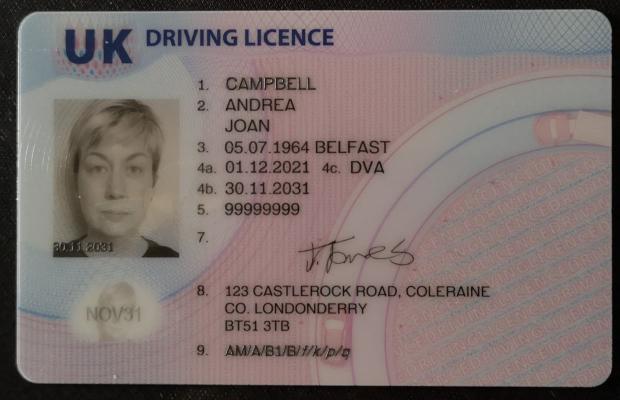
Full
Provisional
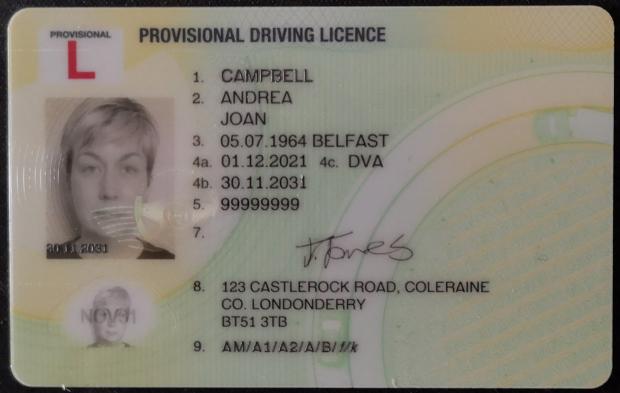
Your personal details (1, 2 and 3)
Fields 1, 2 and 3 of your photocard licence record your surname, first names, date and place of birth.
Date of licence issue (4a), expiry (4b), issuing authority (4)
The date shown in 4a is the date the photocard was issued. 4b shows the date the driving licence expires. The authority that issued the licence is shown in 4c. In Northern Ireland this is DVA.
Driver number (5)
Your unique eight digit NI driver number.
Holder’s photograph (6 – not numbered)
The new photocard licence has a black and white photo. This is because the laser technology used to burn the image onto the card producing a black and white photo is more secure. You will still need to give a colour photo with your application to be stored on your driver record.
Holder’s signature (7)
This is digitally reproduced and burned into the photocard from the signature you gave on the application form.
Holder’s address (8)
This shows your permanent address in Northern Ireland.
Entitlement categories (9)
The letters in capitals show the categories of entitlement covered by the European Community Directive. National categories are shown in smaller letters.
Back of the licence
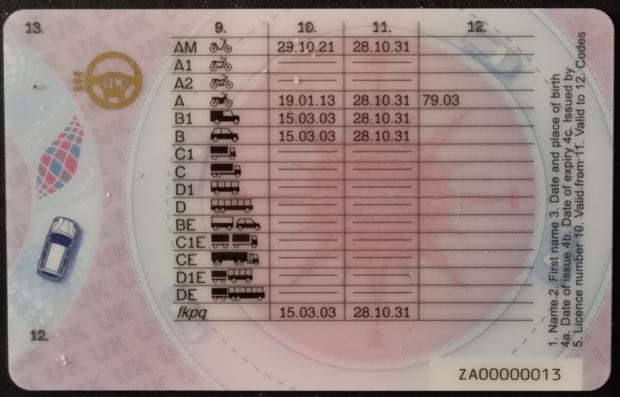
Full
Provisional
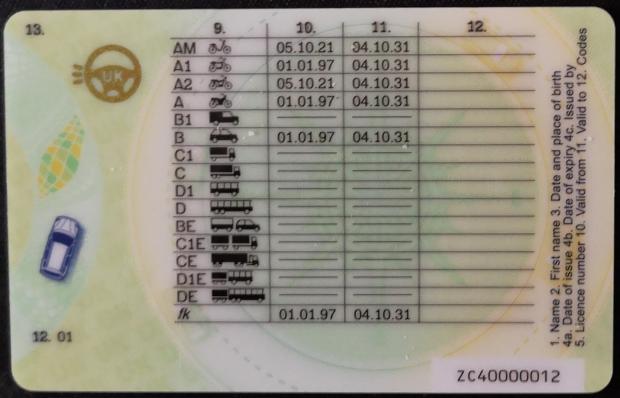
Pictogram entitlement categories (9)
These pictures are representations of types of vehicles in those categories shown. Further information on the vehicles you are entitled to drive
Valid from (10)
The earliest date from which a driving category is valid from.
Valid to (11)
The date until which a driving category is valid to.
Information codes/ restrictions (12)
The code numbers printed in this area show what, if any, restrictions there are. To see what these mean, go to:
Not used (13)
Other security features
The driving licence also has tactile (raised) surfaces, tactile engraved text, changing colours, as well as complex background designs.
Previously issued NI photocard driving licence
Photocard driving licences have been issued since 1 April 1999.
All licence types stay valid until their date of expiry shown at section 4b.
Differences between NI and GB licences
Changes made to the format of the Great Britain driving licences on 8 June 2015 have no affect on licences from the Driver & Vehicle Agency (DVA) in NI.
NI licences are still made up of two parts, a plastic photocard and paper part which is known as the paper counterpart.